
Experts say the party is undoing what it achieved through MNREGA by targeting beneficiaries
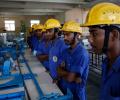
January 2019 saw the maximum number of employment being generated since the data from September 2017, reports Indivjal Dhasmana.

Experts said the builders will now factor in their losses arising from the removal of input tax credit when they pass on the benefits to end users while the latter may want the entire GST cut to be given to them.

"The season averaged maximum temperatures in Himachal Pradesh, West Rajasthan, Konkan, Goa, Coastal Karnataka, Kerala and Arunachal Pradesh are likely to be higher than normal by 0.5-1.0 degree Celsius," the Met department has said in its forecast.
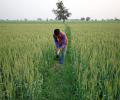
For potato farmers in the north and wheat growers in the eastern parts -- particularly in Jharkhand, Bihar, and Odisha -- the recent rains could in fact be beneficial.

Policy lays out a 5-year road map seeking creation of 3.5 mn jobs and promoting 10,000 start-ups.

A normal monsoon will augur well for the country's agriculture sector and boost crop yields. However, good rains - and surplus crops - could also depress prices, hurting farm income, unless adequate steps are taken.
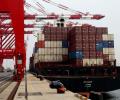
The WTO's quarterly outlook indicator, comprising seven trade parameters, stood at 96.3, the lowest since March 2010 and down from 98.6 in November. Exports from India would be hit if there is a slowdown in world trade.

'A sum of Rs 6,000 a year is very significant for a small farmer whose land holding is very small and whose produce is very small. All these calculations on a daily basis are extremely unfortunate and an insult to farmers.'
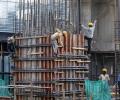
GST rates on under-construction houses maybe reduced from 12 pc with input tax credit to 5 pc without ITC. Similarly, the rate for under-construction affordable houses could come down to 3 per cent without input tax credit, from the current 8 per cent.
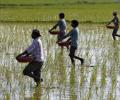
Families with tax-paying members, government employees, professionals, among those who have been exempted from the Pradhan Mantri Kisan Samman Nidhi (PM-KISAN) scheme.

Allegations abound that traders milked the scheme to artificially keep prices down, while a significant amount of growers didn't even register owing to multiple difficulties in registration and were deprived of the payout.
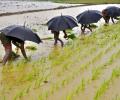
Experts say improper records could lead to large-scale leakages and pilferage and benefits going to ineligible people.
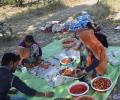
'To bring about a paradigm shift in farmers's income, we need to change our approach to agriculture, and transit from the narrow prism of cultivation to a full-fledged enterprise, by building all associated supply chain linkages.' 'This alone will make the farmer an entrepreneur in his own right.'
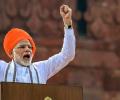
Fifty-six months on, the government's record in implementing these schemes and projects has been mixed, report Arup Roychoudhury and Indivjal Dhasmana.

The area-based income compensation scheme says that farmers should be paid the difference between the actual price they get and the state-mandated MSP. The compensation will be determined on a per acre basis by using district-level estimates of marketable surplus and prices in the harvest season.

However, economic growth in five years of the UPA and NDA cannot be compared because of the now complex back series data, reports Indivjal Dhasmana.

After the 2019 election, one thing is sure: GST will see a number of changes, explains Indivjal Dhasmana.
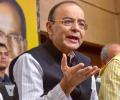
However, independent economists are not as gung-ho as the finance ministry over the likelihood of deficit target being met this time around, says Indivjal Dhasmana.
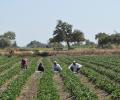
While the farmers are not getting remunerative prices for their produce, at the same time they are forced to pay high prices for items they consume.
 © 2026 Rediff.com - Investor Information - Advertise with us - Disclaimer - Privacy Policy - Sitemap - Feedback - About us - Terms of use - Grievances